


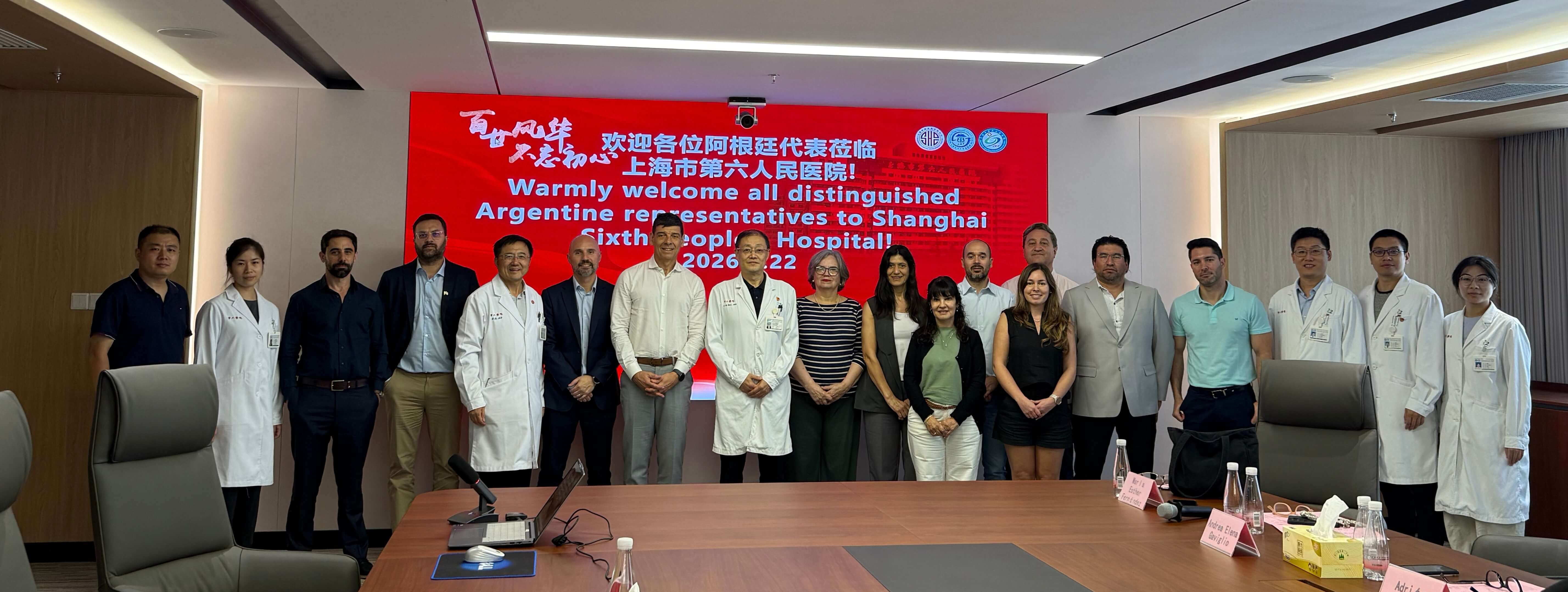
On September 22, a 12-member delegation representing universities and healthcare institutions from Argentina, led by Arnaldo Medina, President of the National University of Arturo Jauretche (UNAJ), visited the Xuhui Campus of Shanghai Sixth People’s Hospital. The delegation comprised experts and professors from six national universities and five hospitals, with backgrounds spanning university administration, hospital management, medical engineering, and clinical medicine. Xiaohui Zhou, Vice President of Shanghai Sixth People’s Hospital; Bin Li, Vice President of the Lingang Campus; and representatives from the Department of Medical Equipment, the Office of the National Center for Orthopedic Medicine, and the Shanghai Key Laboratory of Neuro-Ultrasound Imaging, Diagnosis and Treatment participated in the reception, site visits, and exchange activities. The visit focused on the National Center for Orthopedic Medicine, clinical medicine, clinical engineering, medical technology innovation, professional education, and international collaboration.
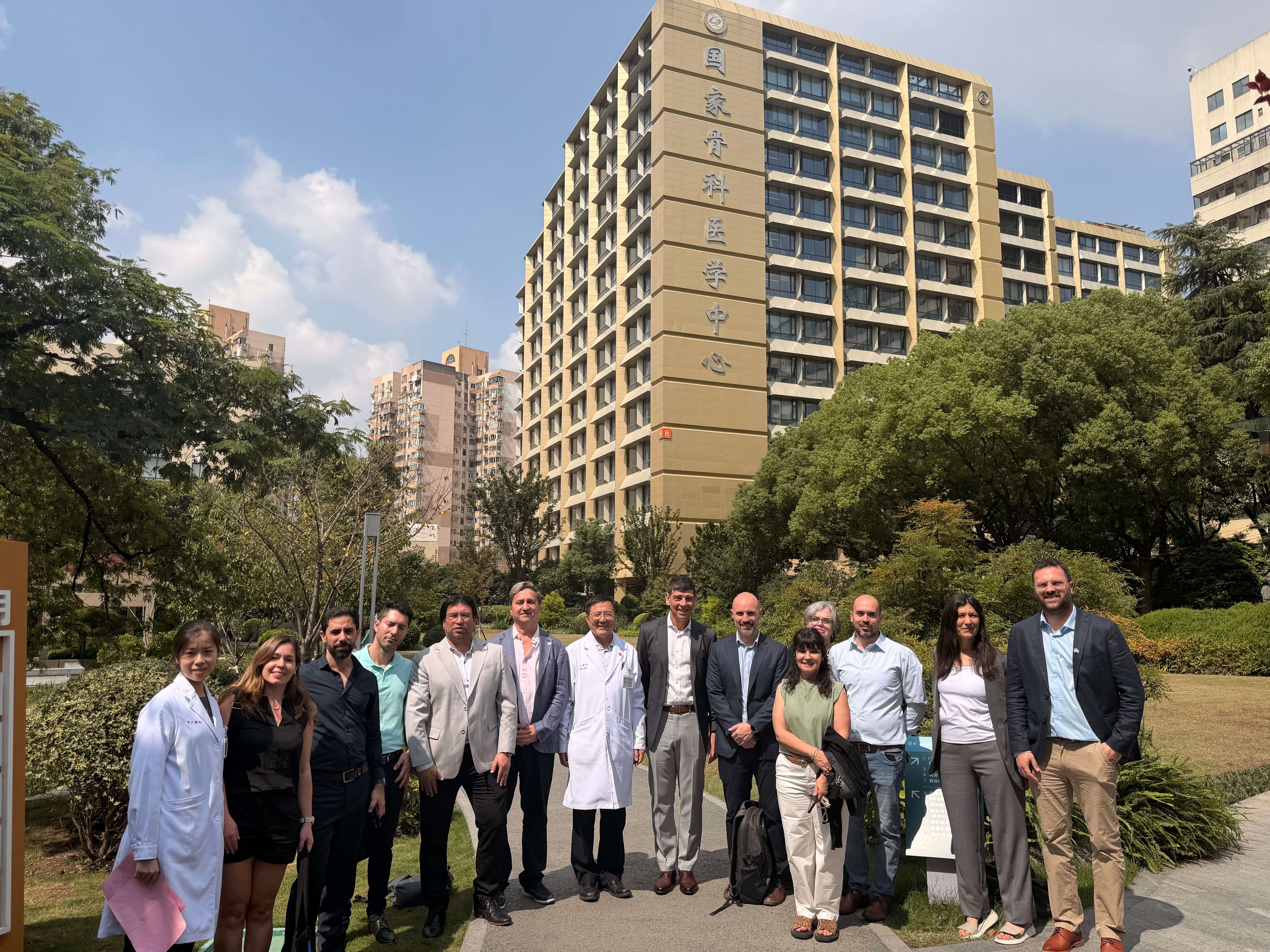
The visit formed part of the China-based study program of the International Postgraduate Program in Health Innovation for Leaders and Decision-Makers, jointly initiated by UNAJ in Argentina and the University of International Business and Economics (UIBE) in China. Designed for healthcare leaders, managers, and researchers from Argentina and Latin America, the program combines online academic modules with institutional visits in Beijing, Shenzhen, and Shanghai, covering healthcare systems, health innovation, emerging medical technologies, and innovation management.
Inside the Clinical and Research Frontlines: Medical Technology in Practice
The morning program began at the National Center for Orthopedic Medicine, where the delegation visited the Sports Rehabilitation Research Center, Clinical Anatomy Research and Training Center, operating rooms, and Department of Radiology. The delegation then continued to the Shanghai Key Laboratory of Neuro-Ultrasound Imaging, Diagnosis and Treatment.
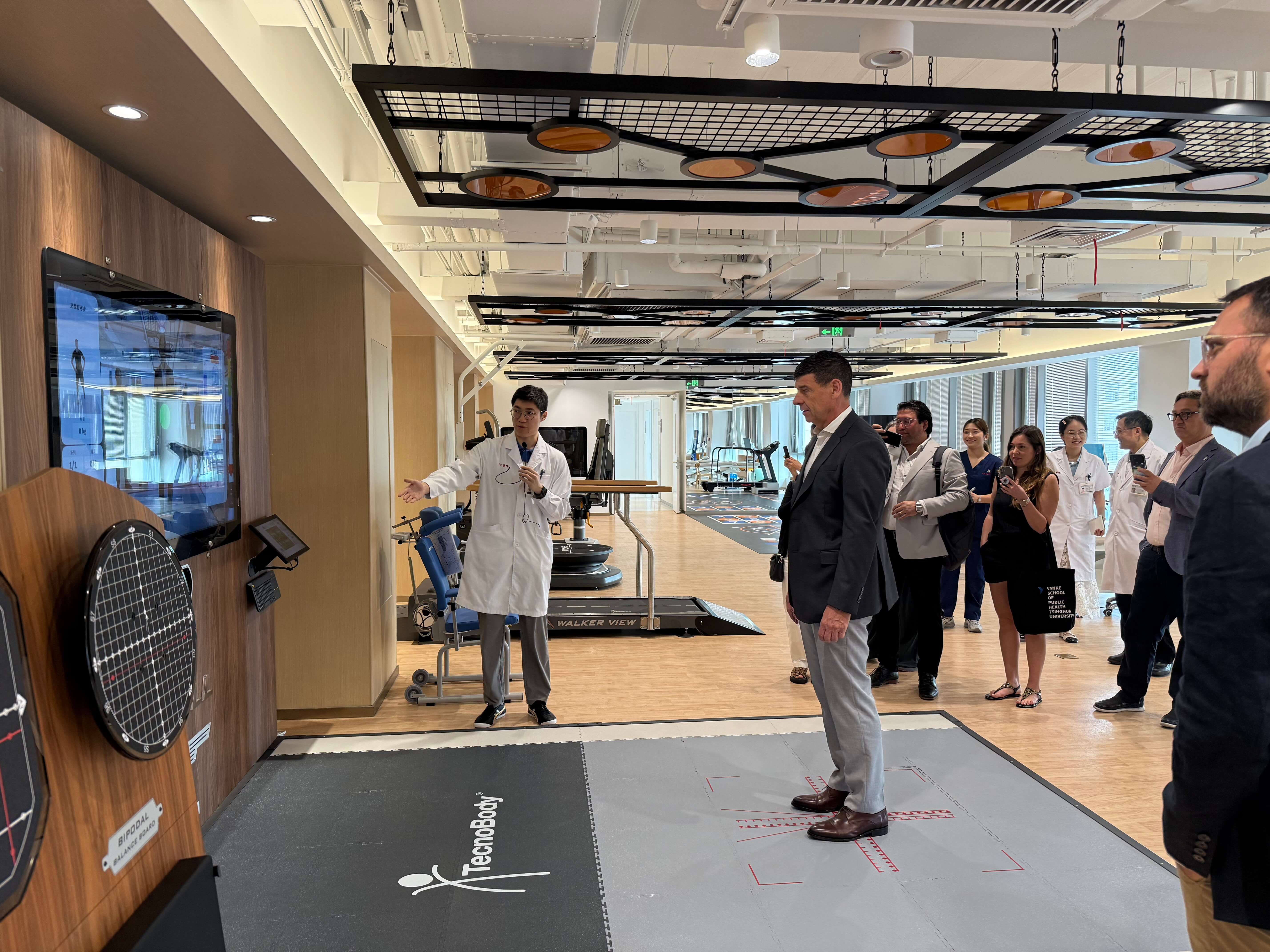
Shanghai Sixth People’s Hospital’s orthopedic and sports rehabilitation platforms are supported by the National Center for Orthopedic Medicine and have continued to explore the application of artificial intelligence, computer vision, and sensor technologies in rehabilitation assessment and intelligent rehabilitation. At the Sports Rehabilitation Research Center, Dr. Ziyun Li introduced the center’s layout, rehabilitation technologies, and their practical applications. The delegation toured the rehabilitation hall and experienced a 3D motion capture and analysis system, a digital treadmill, and an ankle rehabilitation robot, gaining a direct understanding of how digital technologies are used in movement assessment, gait analysis, and rehabilitation training. Several delegates tried the equipment themselves and exchanged views with staff on different application scenarios and approaches to rehabilitation assessment.
The delegation also visited the center’s sky garden and fitness area, gaining further insight into how the hospital integrates functional training, sports rehabilitation, and a rehabilitation-oriented environment into daily practice. The delegation spoke highly of Shanghai Sixth People’s Hospital’s professional development in sports rehabilitation, its application of digital technologies, and its innovation in medical-engineering integration.
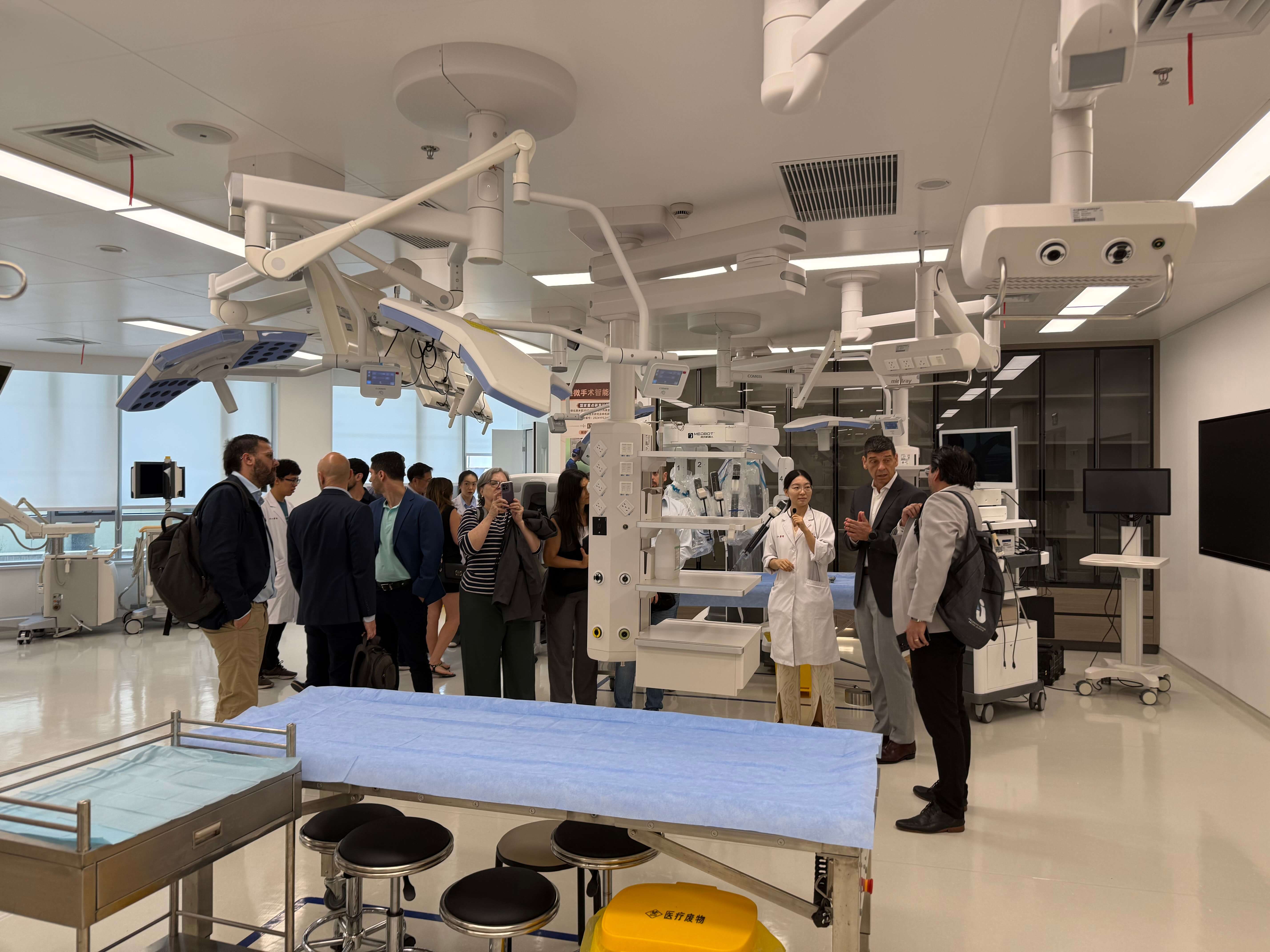
The delegation then visited the Clinical Anatomy Research and Training Center, where Dr. Hui Liu introduced its teaching and practical training environment. The visitors learned how clinical anatomy resources support clinical education, surgical skills training, and research. Drawing on practical needs in medical education, the two sides exchanged views on anatomy-based training, physician skills development, and clinical research support. The center also provides open and shared anatomy training and research support while exploring approaches that integrate clinical medicine with digital technologies in education and research. The delegation expressed appreciation for the center’s model of integrating clinical teaching, skills training, and research practice, noting its strong practical value for medical education and the development of clinical competence.
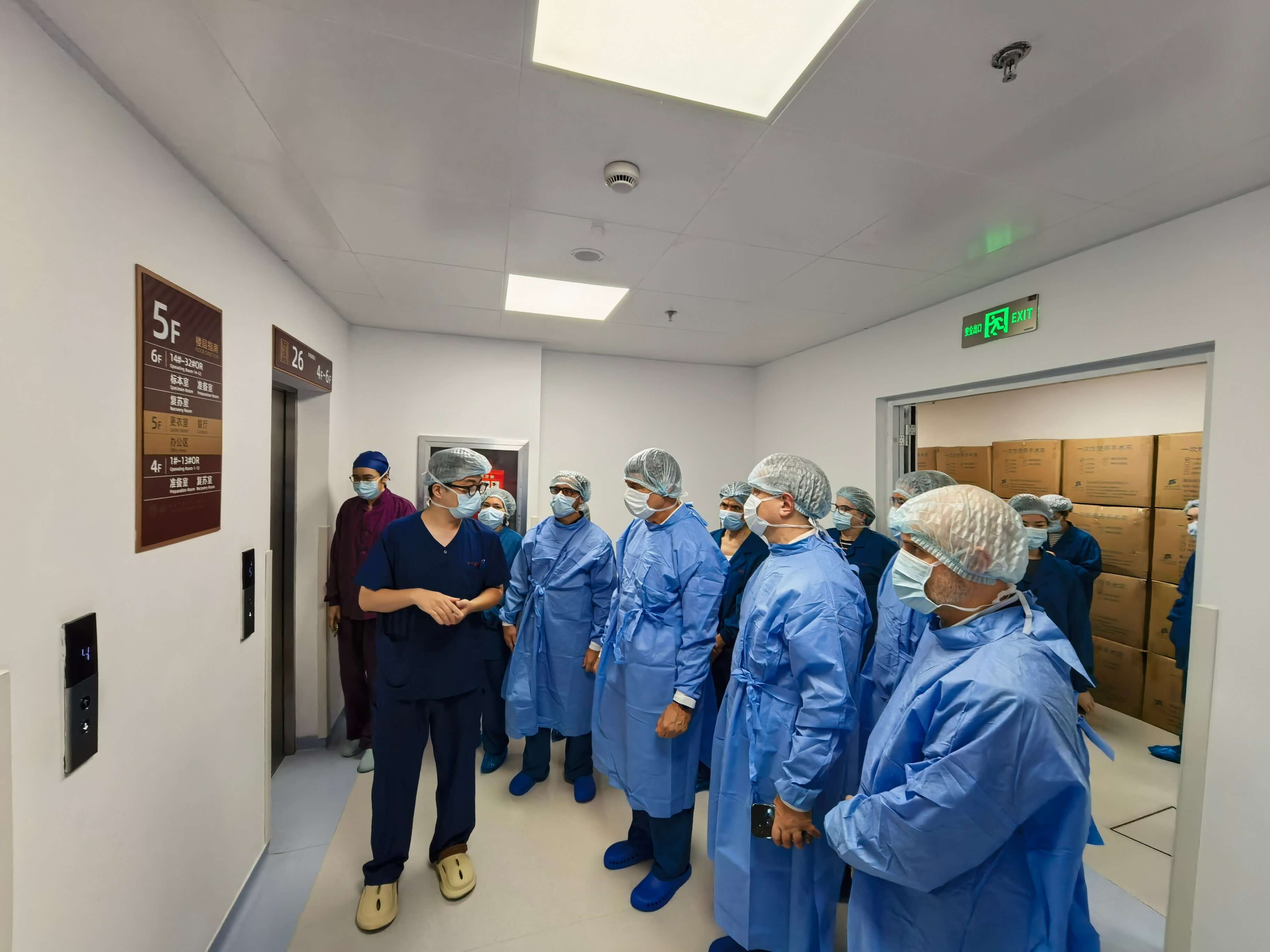
At the operating rooms of the National Center for Orthopedic Medicine, Head Nurse Zichen Wang introduced the basic layout, workflow, and medical equipment configuration of the surgical area. The delegation gained a first-hand view of the orthopedic surgical environment and the use of medical equipment in clinical practice. Given the professional backgrounds of many delegates in hospital management, biomedical engineering, and clinical engineering, the two sides also exchanged views on operating-room equipment management, technical support, and collaboration between clinical and engineering teams. The delegation showed particular interest in the hospital’s internationally advanced hybrid operating room and its intelligent vertical medical transport and storage system.
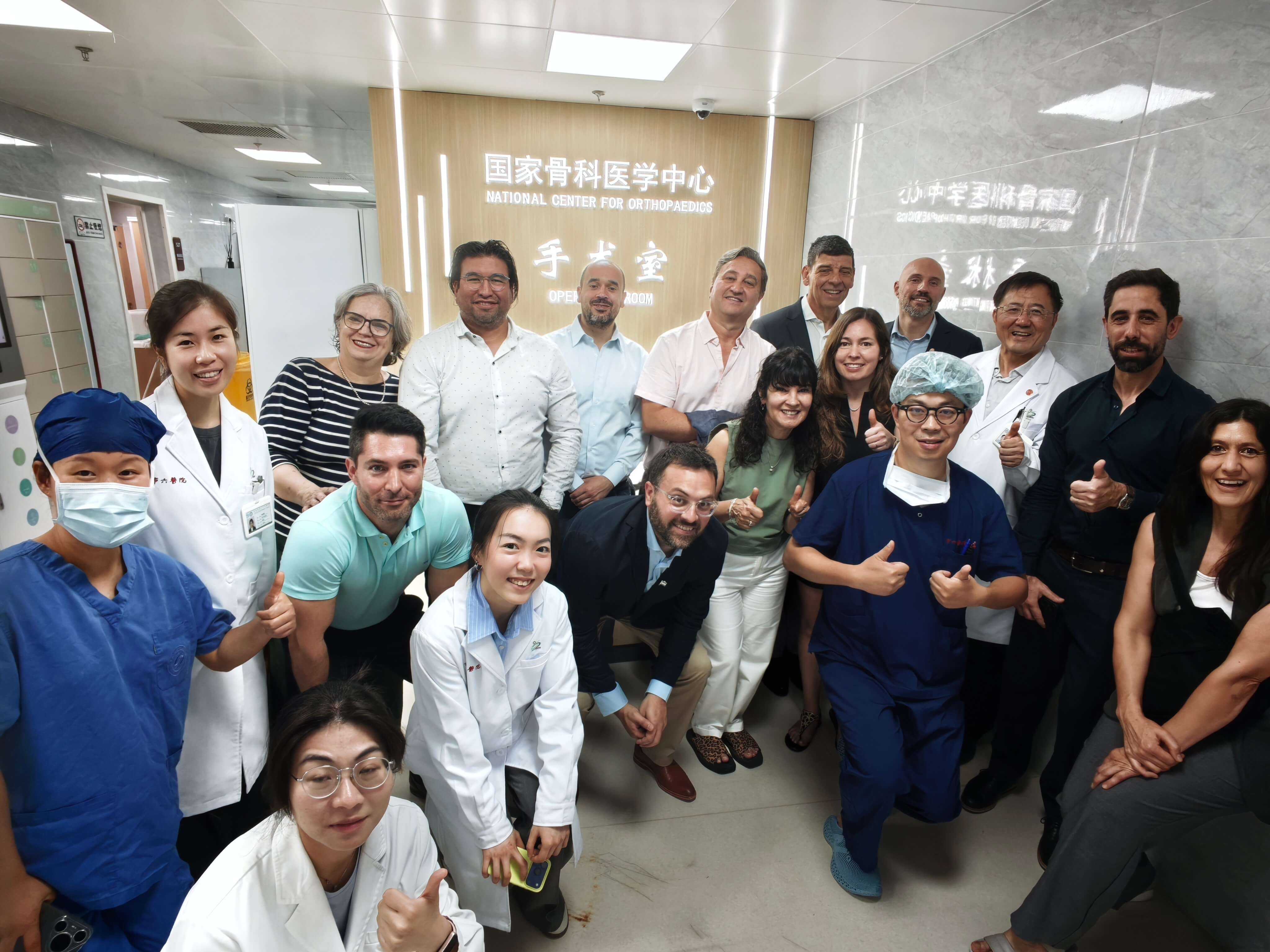
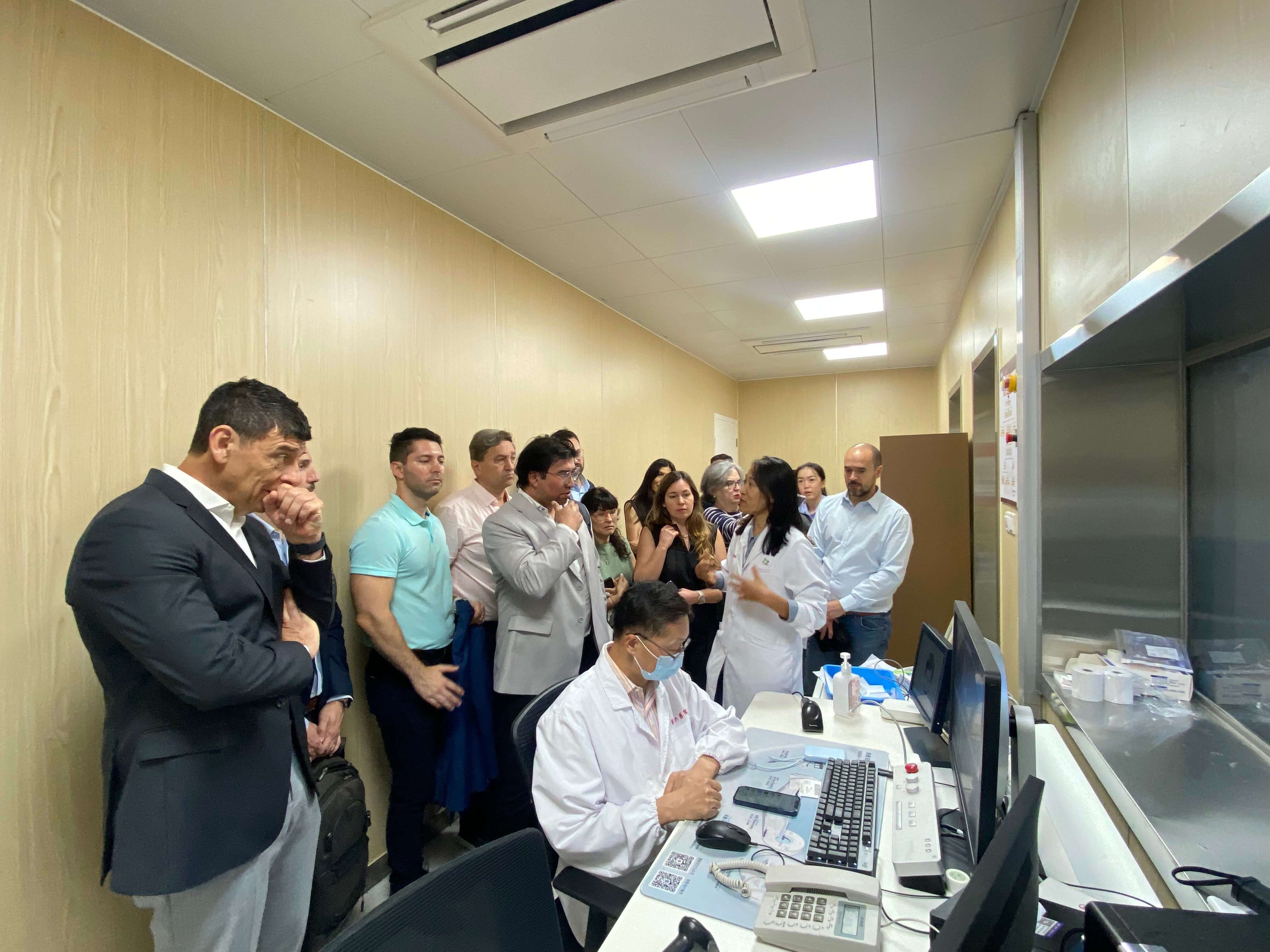
At the Department of Radiology, Xiaopei Shi highlighted the hospital’s recently installed 5T MRI system. The delegation visited the MRI examination area and learned about the scanning environment, technical characteristics, and clinical applications of the system. Ultra-high-field 5T MRI supports whole-body clinical imaging and offers technical advantages in imaging of the central nervous system, cardiovascular system, musculoskeletal system, abdomen, and other anatomical regions. Using the system as a practical reference point, the two sides also exchanged views on the clinical application, operation, and technical support of advanced medical imaging technologies.
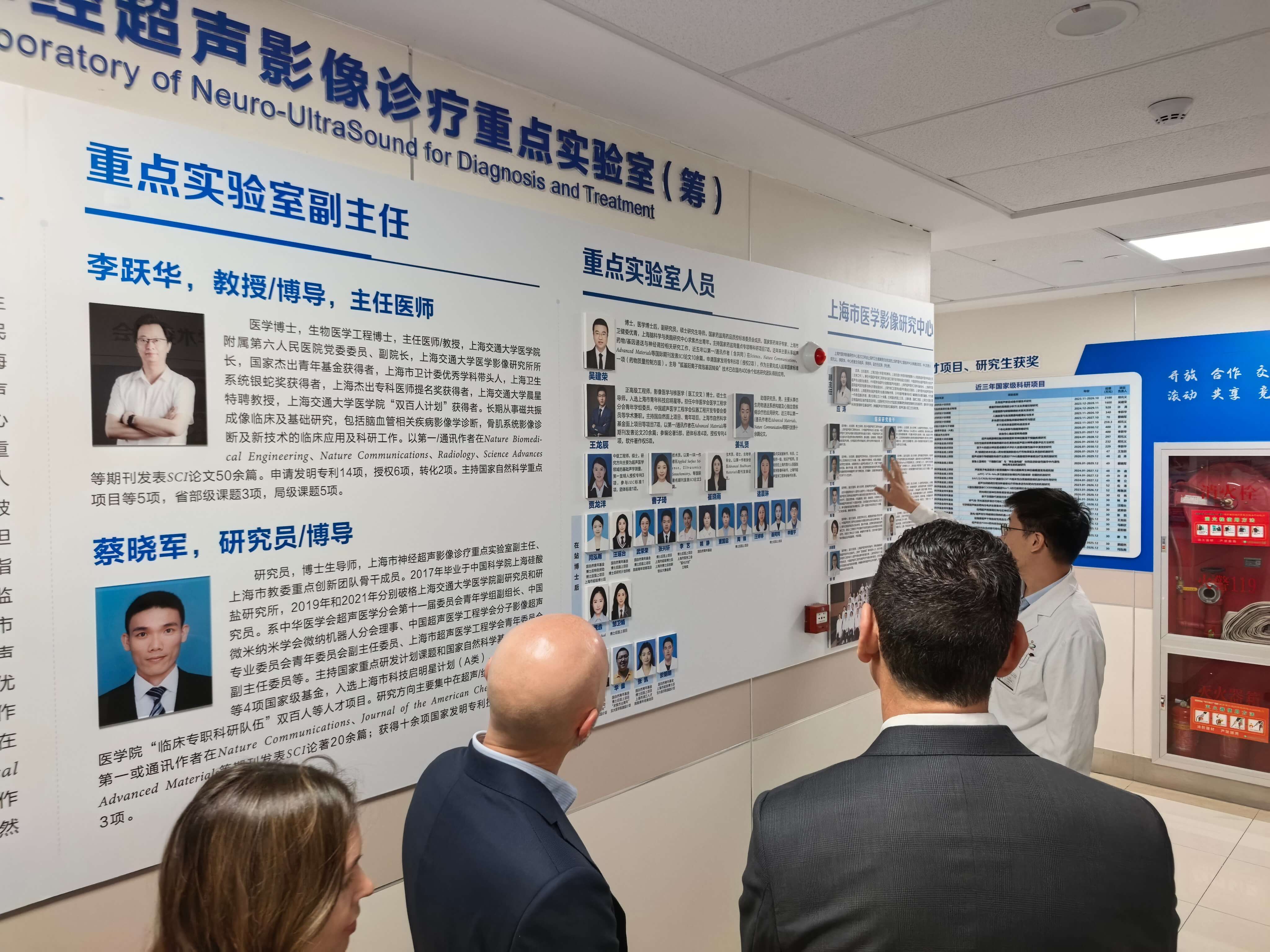
The delegation later visited the Shanghai Key Laboratory of Neuro-Ultrasound Imaging, Diagnosis and Treatment, where Dr. Longchen Wang introduced the laboratory’s development, research directions, and research platforms and guided the delegation through its facilities. The visitors learned about research in new neuro-ultrasound technologies, ultrasound neuromodulation, and non-invasive integrated neuroimaging, and exchanged views on medical-engineering integration, innovation in medical ultrasound, and the translation of research outcomes. The delegation was particularly impressed by the laboratory’s dedicated platforms for neuro-ultrasound and multi-physical-factor neuromodulation and by its research on new neuro-ultrasound technologies, mechanisms of ultrasound neuromodulation, and non-invasive integrated neuroimaging.
Through the morning site visits, the delegation gained first-hand exposure to the hospital’s clinical, teaching, and research platforms across sports rehabilitation, medical education, surgical care, medical imaging, and medical research, deepening their understanding of the operation and development of a major Chinese public hospital serving as a National Medical Center.
Clinical Engineering and Health Innovation: Advancing China–Argentina Exchange and Collaboration
Following the site visits, a formal exchange session was held in Room 502 of the Teaching Building, moderated by Yuechu Ni, Secretary of IFMBE-CED.
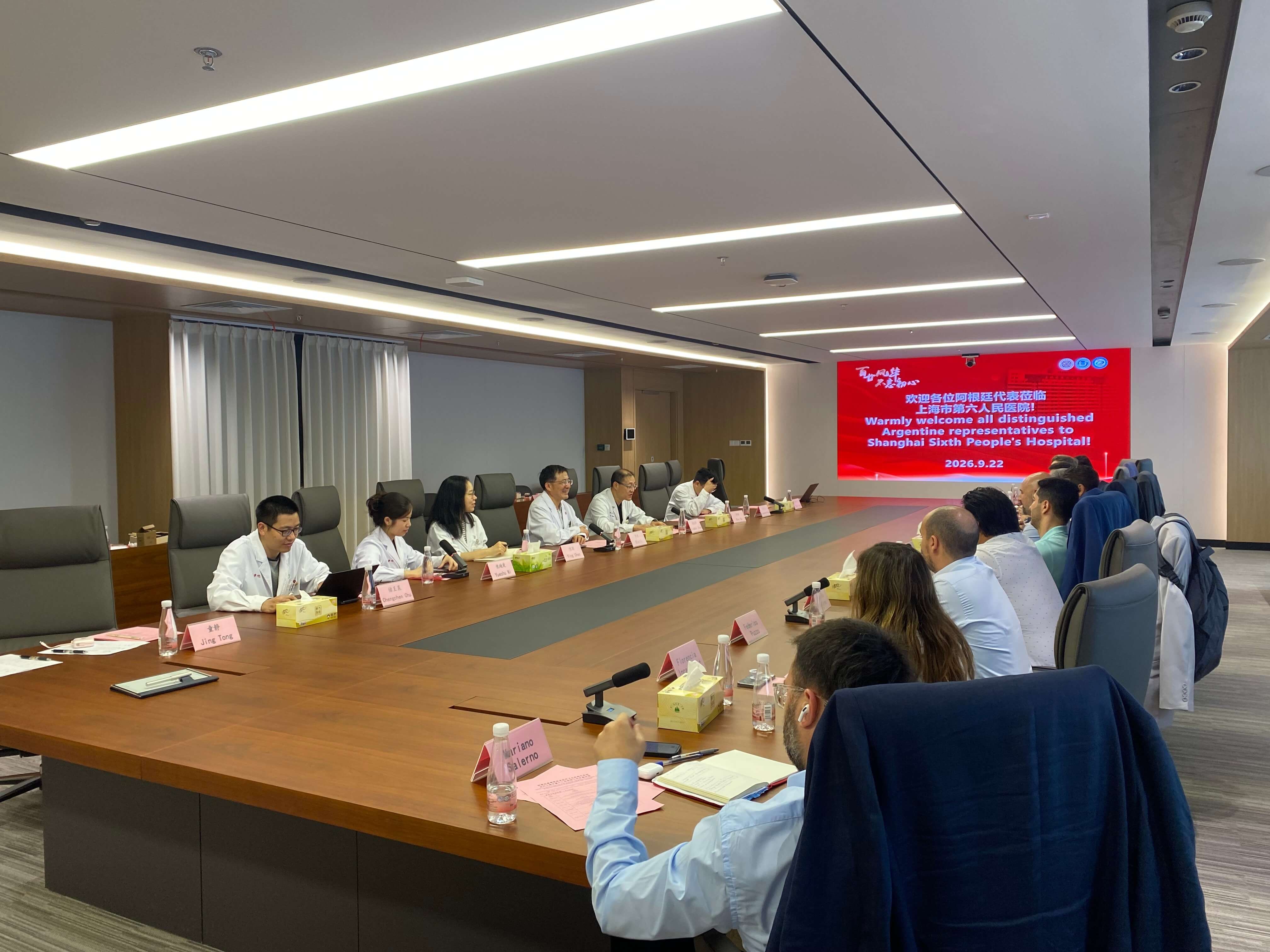
Xiaohui Zhou, Vice President of Shanghai Sixth People’s Hospital, delivered welcome remarks on behalf of the hospital and warmly welcomed President Medina and the delegation. He introduced the development of Shanghai Sixth People’s Hospital and expressed the hope that the face-to-face visit and exchange would give the Argentine guests a deeper understanding of the hospital’s practices in clinical care, medical technology innovation, clinical engineering, and hospital management. He also looked forward to opportunities to visit Argentina for exchange next year and to further expand cooperation in healthcare.
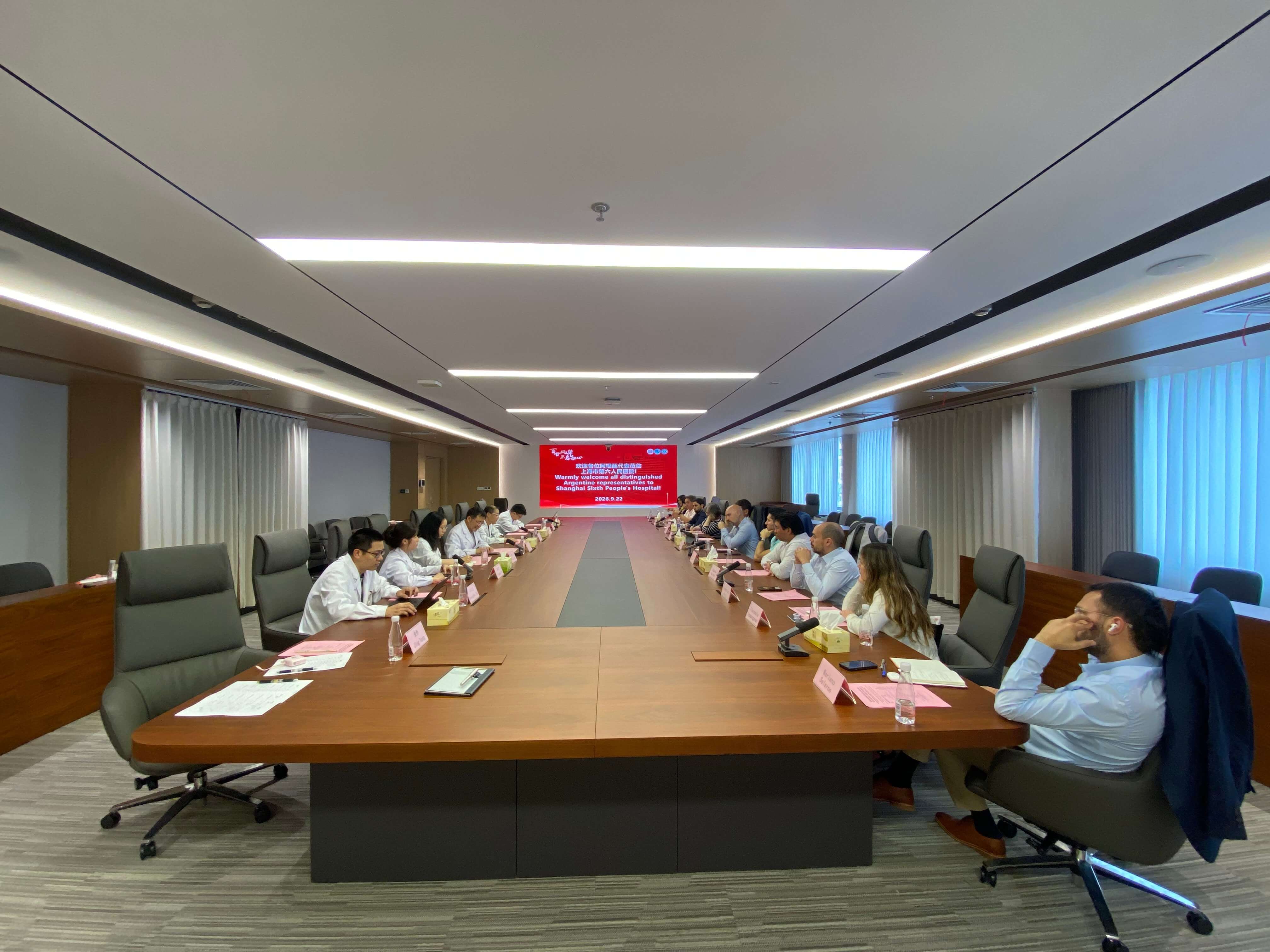
Arnaldo Medina, President of UNAJ and leader of the delegation, then delivered remarks on behalf of the Argentine side, expressing his appreciation for the hospital’s reception and sharing the significance of and expectations for the study visit in China. Prof. Fernando Ballina, Director of Clinical Engineering at Hospital El Cruce, a Board Member of the Clinical Engineering Division of the International Federation for Medical and Biological Engineering (IFMBE-CED), and a core representative for the Americas region, subsequently introduced the delegation and the International Postgraduate Program in Health Innovation. He said the visit to Shanghai Sixth People’s Hospital had been highly rewarding, expressed admiration for the rapid development of Chinese hospitals in recent years, and noted his interest in learning more about the latest developments in clinical engineering in China.
During the academic session, Longchen Wang, Deputy Director of the Department of Medical Equipment, delivered a presentation entitled “Overview of Clinical Engineering at Shanghai Sixth People’s Hospital,” introducing the hospital’s work in clinical engineering, discipline development, and medical equipment management.
Bin Li, Vice President of the Lingang Campus and Chair of the Clinical Engineering Division of the International Federation for Medical and Biological Engineering, then presented “Clinical Engineering in China: Yesterday, Today and Tomorrow.” His presentation reviewed the development of clinical engineering in China, its current practice, and future directions.
During the open discussion, Ying Chen, Deputy Director of the Office of the National Center for Orthopedic Medicine; Yufei Yan, physician in the Department of Sports Medicine; Xiu Xu, Deputy Director of the Department of Medical Equipment; and other hospital participants joined the exchange. Building on the morning visits and presentations, representatives from both sides discussed sports medicine and rehabilitation, clinical engineering practice, medical technology innovation, medical equipment management, professional education, and interdisciplinary collaboration. Members of the Argentine delegation also shared perspectives from their own healthcare and higher-education settings, further deepening mutual understanding of each side’s healthcare system and professional practice.
By combining site visits with focused academic exchange, the visit gave the Argentine delegation a more direct understanding of Shanghai Sixth People’s Hospital’s practices in the development of the National Center for Orthopedic Medicine, sports rehabilitation, clinical engineering, medical imaging, medical education, and interdisciplinary medical-engineering research, while also providing a platform for further professional exchange and institutional collaboration between the two sides.
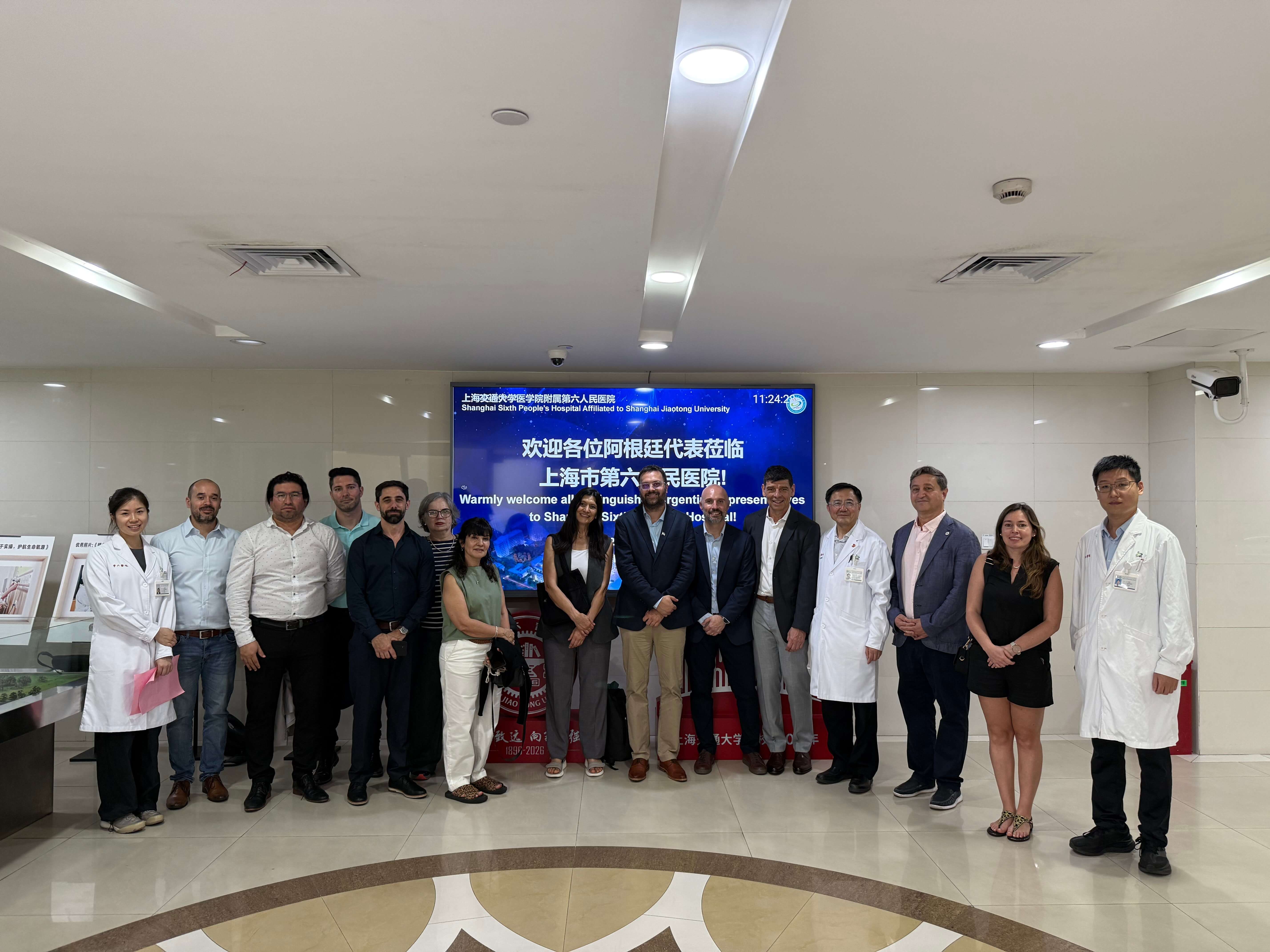
Looking ahead, Shanghai Sixth People’s Hospital will continue to leverage the platform of the National Center for Orthopedic Medicine, uphold an open and collaborative approach, and strengthen exchanges and mutual learning with universities, healthcare institutions, and professional organizations worldwide. The hospital will further strengthen its role as a hub for medical-engineering innovation and as a showcase in Shanghai and across China for the application of innovative medical technologies and products, creating more opportunities for international knowledge sharing in healthcare, professional education and training, the global reach of innovative medical technologies and products, and international project collaboration.
News
- Connecting China and Argentina Through Healthcare Innovation: Argentine Delegation Visits Shanghai Sixth People’s Hospital09-29
- Shanghai Sixth People’s Hospital ENT Team Presents at IFOS 202609-16
- Professor Wei Jia and Aihua Zhao’s Team Discovers Pu-erh Tea’s Hypoglycemic Effects Favor Females04-18
- Shanghai Sixth People’s Hospital Welcomes BDMS Delegation to Advance International Collaboration03-30
- Call for Applications: 2026 NSFC Excellent Young Scientists Fund Program (Overseas)02-11
- Shanghai Sixth People’s Hospital Delegation Visits Leading UK Universities02-04
- Shanghai Sixth People’s Hospital and Indonesian Ministry of Health Launch Joint Neurointerventional Training Program10-18
- 16th SJTU Medical Imaging Summit Forum and 2025 Advanced Seminar on Neurointervention and Neuroimaging Held in Shanghai10-16
